
About the Campus Calling Card Vine
slide to see other pictures


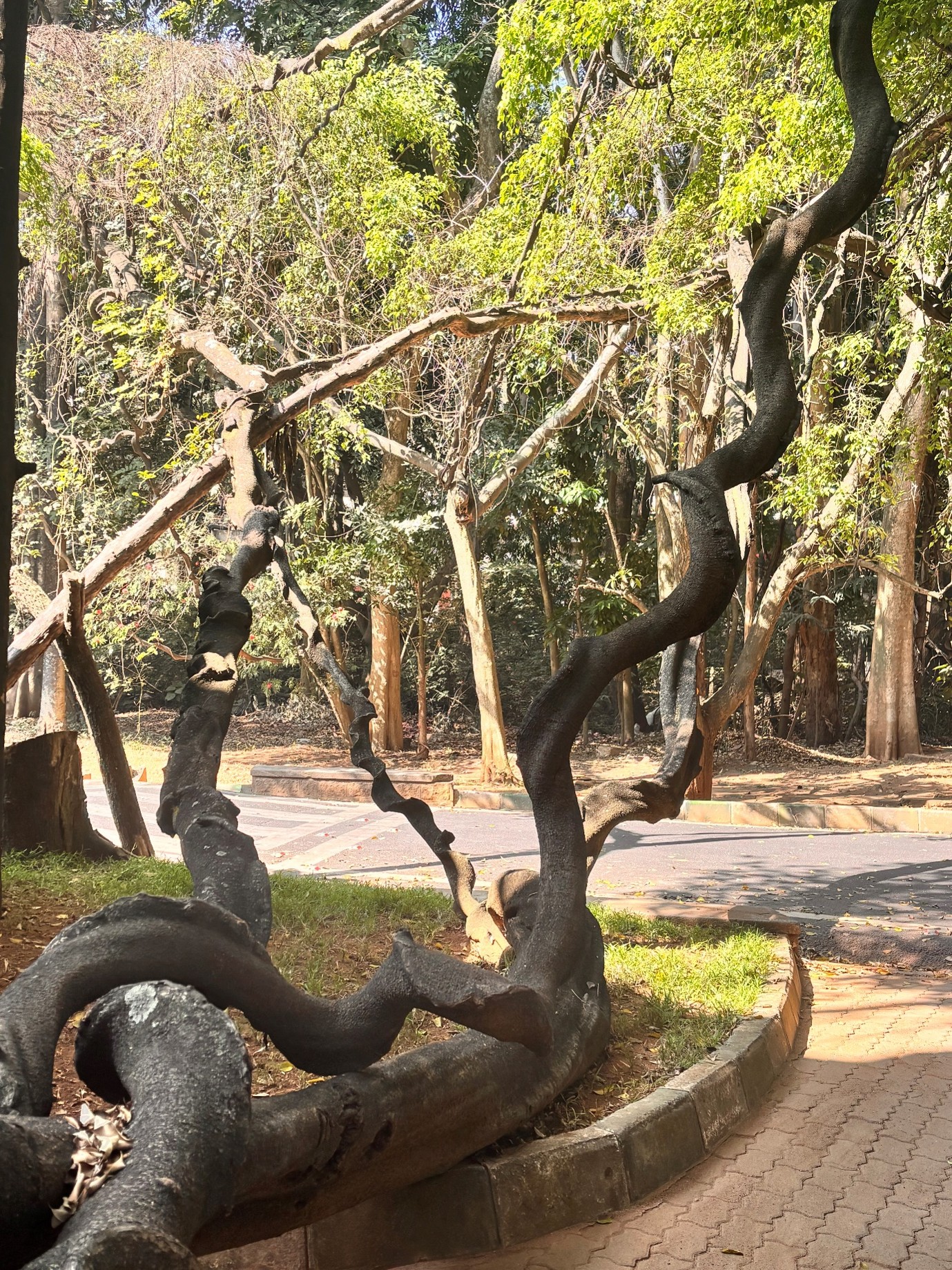
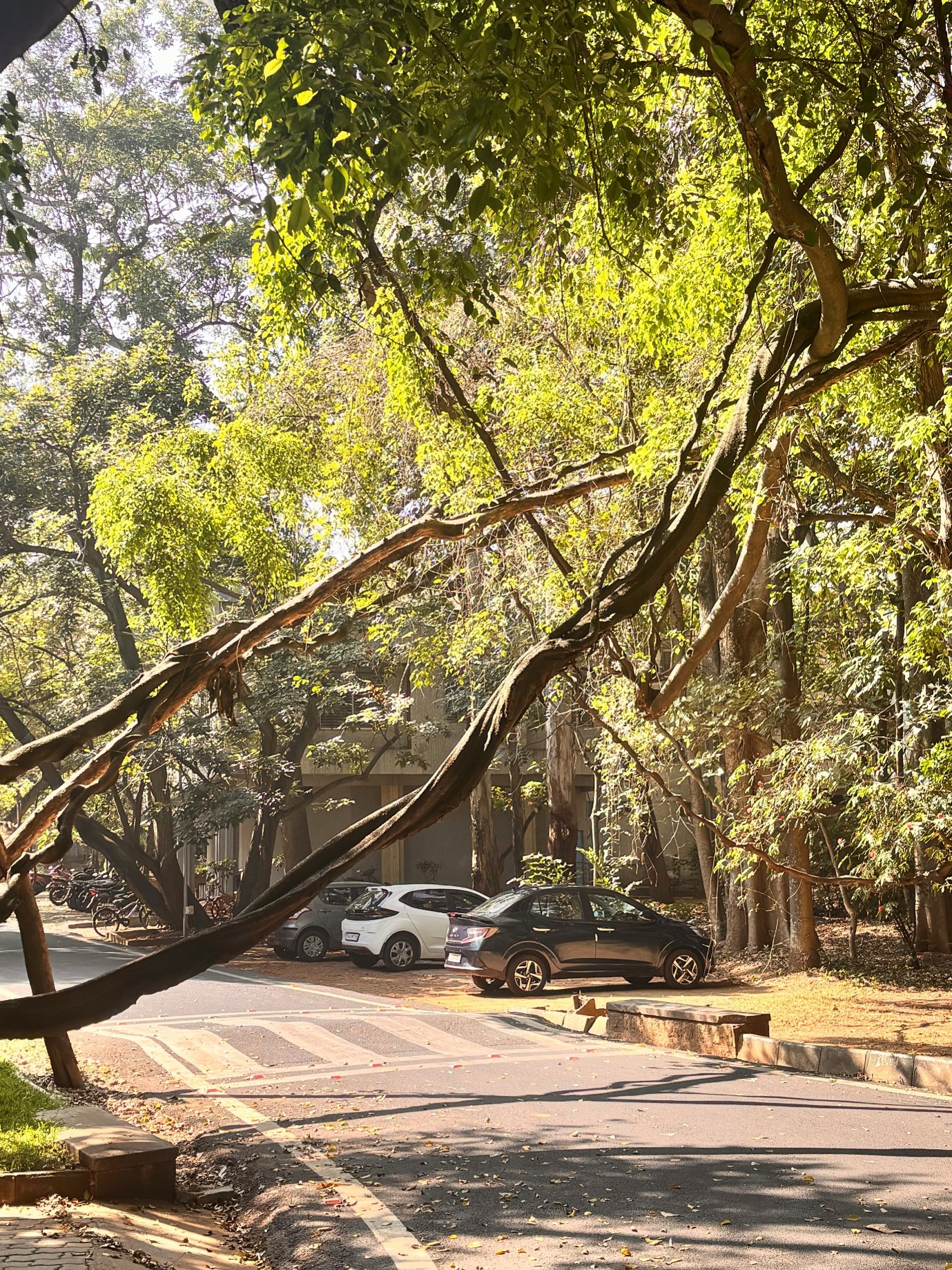
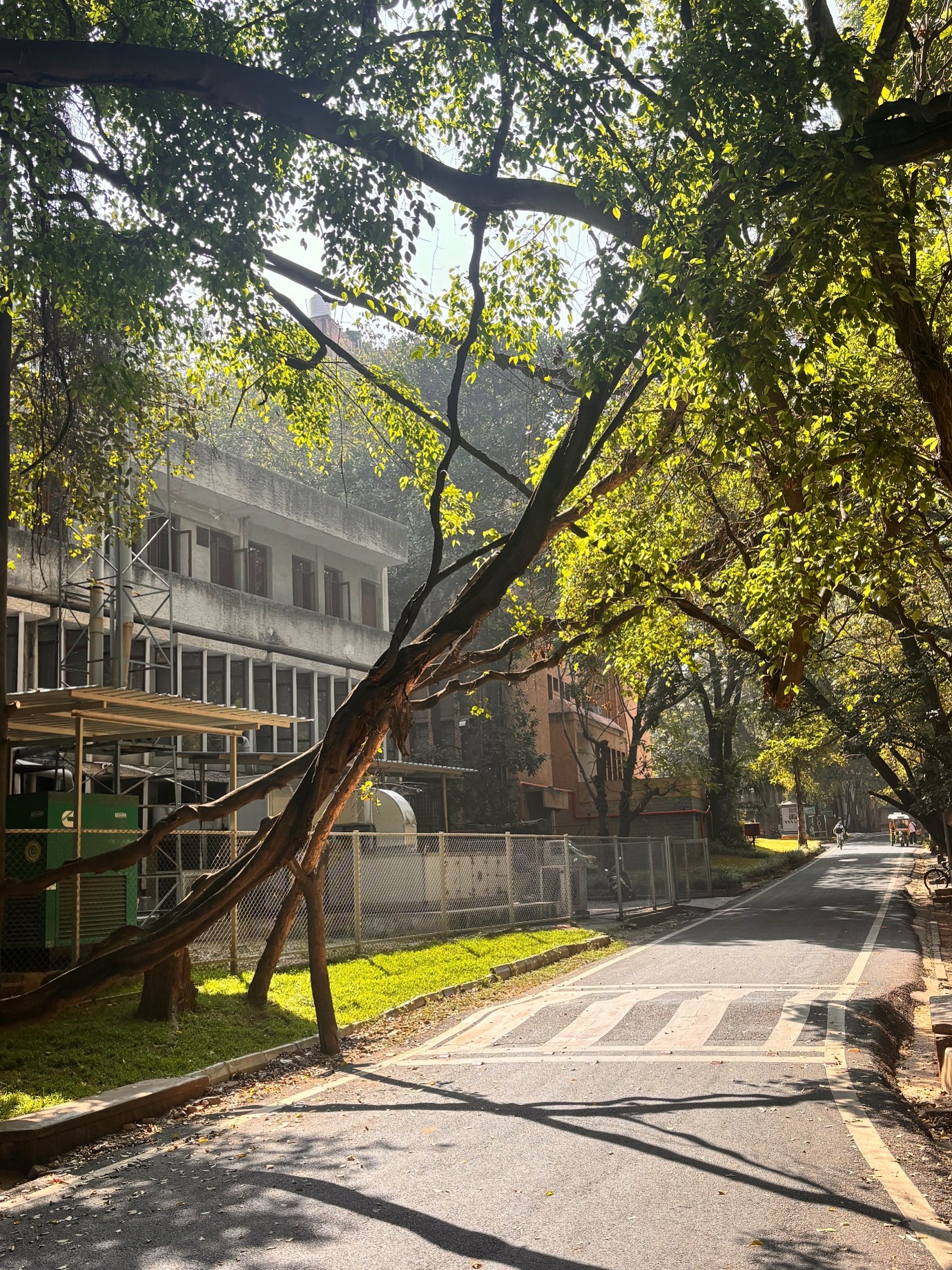
Image credits- A. Ankita Rani and Shwetha Mukundan
The story of Entada rheedei at the Indian Institute of Science, Bengaluru, India, begins in the 1990s when one of the saplings was brought to the IISC and planted next to the Centre for Ecological Sciences building in 1984. It's fascinating to see it slowly grow and develop into a magnificent specimen. The climber began to flower and produce seeds around 1995.
A woody vine located on the campus of IISC, this distinctive plant is anchored in the soil and climbs onto adjacent trees to maximise sunlight exposure for its canopy. The presence of this species, Entada rheedei Spreng. (Fabaceae), A liana from tropical forests, at the Indian Institute of Science, has facilitated numerous research avenues, including the biomechanical properties of its various parts, tropic responses, climbing mechanisms, nitrogen fixation, photosynthesis type (C3 or C4), root pressure, reproductive biology, the process of invasive growth, and morphological reactions upon contact with supporting trees. Over a span of less than 15 years, this plant has developed into a sizable liana, extending its canopy across the crowns of nearby trees within an area roughly equivalent to 1.6 hectares. It has utilised its cable-like stolons formed in the air to navigate and spread its canopy across gaps between trees. As its climbing structures are primarily concealed within the crowns of supporting trees, tracking their connections and assessing the liana's spread area necessitated prolonged observation, particularly since confirmation of identity was achievable only through examination of its flowers and fruits.
The introduction of a solitary Entada genet to a research campus has created an opportunity to observe novel morphological features in a giant liana. This development raises important questions and generates ideas regarding the ecology of lianas as well as the biomechanics associated with lianoid forms.
References:
Trees of Bangalore (Vol. 1), Professor K. Shankar Rao, Indian Institute of Sciences, Bengaluru, India
Current Science (Vol. 128), No. 12, Prof Madhav Gadgil
Conference Manager

Name: Mr. Gaurav Sinha
+91 -98717 00186
iubsga2026@gmail.com